
Want To Have A More Appealing Proxy Sites? Read This!
페이지 정보
작성자 Alfonso 작성일24-02-13 07:53 조회19회 댓글0건관련링크
본문
A proxy or proxy server is software that sits as an intermediary between client and server over the internet. Without a proxy, a client will send a request to resources directly a server, and then the server would provide the requested resource directly to the user. While this is a simple method to comprehend and utilize, adding proxies offers advantages in the form of increased performance, privacy and security, among other things. As an additional layer of being able to pass through, proxies function as a security layer for the internet, separating servers and clients.
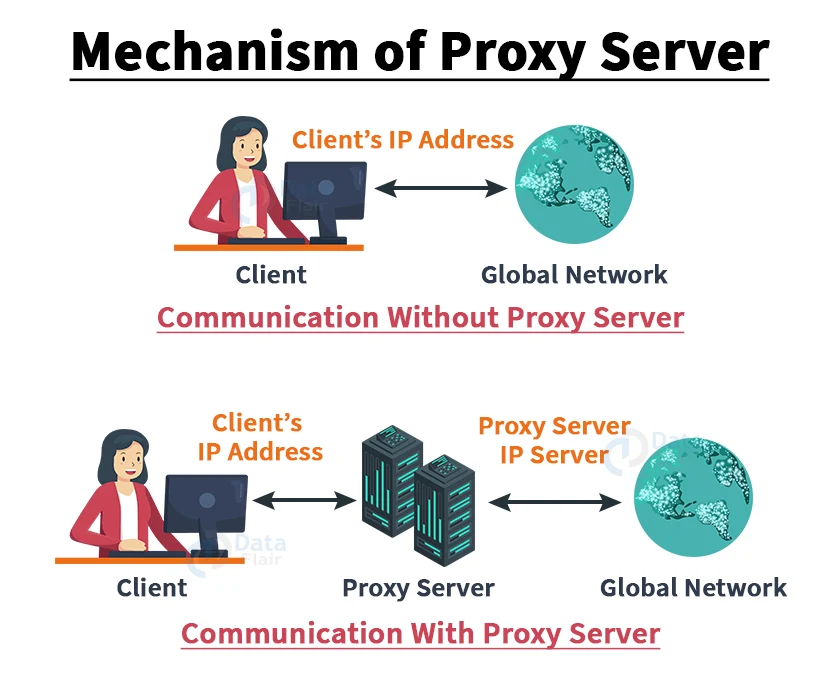
The combined package of server hardware with the software to install proxy servers is usually called proxy servers. But, this article will focus on proxy servers that are typically described as software, as and those employed to complement web servers. We will present a summary of the two main types of proxies: the forward proxy and a reverse proxy. Each has its own usage that can cause confusion due to the same terminology.
This article will give you an idea of the what proxies and their subtypes are, and their benefits in a range of configurations. Through the article you will understand how to identify the scenarios in which a proxy is beneficial, and determine the best option to use a forward or reverse proxy based on the situation.
Understanding Forward Proxies
Forward proxy, also referred to in the context of open proxy. An open proxy serves as a representative for a client who attempts to make an online request to an source server. In this situation the entire request sent by the client is instead controlled by the forward proxy. Forward proxy in the place of the client, will review the request. First, it will check if the client been granted permission to send requests using this particular forward proxy. It then will reject a demand and then forward the request to an original server. The client is not able to have direct access for the web. It is able to access only the information that the forward proxy allows it access to.
The most frequent use of forward proxies is greater privacy or security on the internet. Forward proxy connects to the internet instead of a client and during this process it is using an alternative IP address to the client's original IP address.
Based on how it has been set up according to the way it was configured, a forward proxy could provide a variety of functions depending on how it is configured. This allows users to:
Avoid ad tracking.
Circumvent surveillance.
Find out the restrictions that apply to your location.
Forward proxies are also utilized in systems that rely on central security and permission -based access, like in workplaces. If all internet traffic flows through an common forward proxy layer, a administrator is able to limit access to only a small user group to the internet filtered by a common firewall. Instead of putting firewalls in place for the client layer that may comprise several devices with diverse environments and users, it is possible to set up a firewall located at the forward proxy layer.
It is important to remember to remember that forward proxy servers need to be manually configured for be utilized, whereas reverse proxy servers are often not noticed by clients. Based on the type of IP address the client, it is sent to the server that created it by the forward proxy, privacy and security may be granted or kept hidden.
There are a myriad of alternatives to consider for forward proxies
Apache is a well-known open-source web server offering forward proxy capabilities.
Nginx is another well-known open-source web server with forward proxy features.
Squid: An open-source forward proxy that uses the HTTP protocol. This doesn't offer an entire website server software. You can read our instructions on how to configure Squid proxy to allow private connections in Ubuntu 20.04.
Dante Forward Proxy that utilizes the SOCKS protocol rather than HTTP, making it better suited to use in instances such as peer-to-peer traffic. It is also possible to learn how to setup a Dante proxy for private connections on Ubuntu 20.04
Understanding Reverse Proxies
A reverse proxy acts as an intermediary for web servers that handle incoming requests by clients on behalf of. Web servers can consist of a single server, or a number of servers. Additionally, it could be an application server, such as Gunicorn. In either scenario the request comes from an internet user generally. The majority of the time your request is transmitted directly to the server, which is equipped with all the resources the client needs. In contrast reverse proxy acts as an intermediary that isolates Web servers from direct communication with the open internet.
From the consumer's point of perspective, using reverse proxy is not any different from using an internet server direct. It's basically the same however the user cannot discern the distinction. The client asks for the resource, and receives it without additional configurations that need to be completed by the client.
Reverse proxies provide features such as:
A central layer of security to protect the server.
Controlling traffic coming inbound according to rules you can create.
A new feature for caching is now available.
While centralized security is a benefit of both forward and reverse proxies, reverse proxies provide this feature only to the server layer and not to the client layer. Instead of establishing firewalls on Web server layers, which could include multiple servers and various configurations, the majority of security for firewalls is focused on the reverse proxy layer. Additionally, removing the burden of interacting with a firewall and communicating with clients outside of web servers allows the firewall to concentrate on meeting the requirements of their clients.
In the case of multiple servers running within reverse proxy, it controls which requests are directed towards which servers. There are many web servers working on the same server and serving different kinds of resources or a combination of both. These servers utilize the HTTP protocol, which is similar to a traditional web server. However, they can be equipped with application server protocols like FastCGI. You can set up reverse proxy servers to guide the clients towards specific servers according to the kind of resource they're seeking, or to comply with certain rules for traffic load.
Reverse proxies can also be able to gain advantages from their positioning prior to web servers, through offering caching capabilities. Large static assets can to be set up with caching rules so that they do not have to connect with web servers every time you request. Certain solutions offer the option to serve static assets directly without having to contact the server once. In addition reverse proxy is able to handle compression of these assets.
The well-known Nginx web server also functions as a powerful reverse proxy option. Although it is real that the Apache webserver is fitted with an reverse proxy which is an additional option for Apache however Nginx was designed originally for and is focused on the reverse proxy feature.
Differentiating Forward Proxy and reverse Proxy Examples
Since "forward" and "reverse" have connotations of directionality and false comparisons to "incoming" and "outgoing" traffic. It could be confusing because both types of proxy services process requests and respond. A better approach to distinguish between forward and reverse proxy service is to think about the needs of the application you're creating.
A reverse proxy is a great option in the case of creating a solution for offering web-based services via the internet. They serve as your servers for any interaction with the Internet.
Forward proxy software is beneficial when it is placed in front of the client for personal use and in the professional setting. They represent your customers when you connect to the internet.
The use case-based differentiation instead of focusing on commonly used naming conventions can help you in avoiding confusion.
Conclusion
This article explains the definition of a proxy along with two types: the forward proxy and reverse proxy. Practical applications and an exploration of beneficial features were used to distinguish between forward and reverse proxy. If you're interested in learning more about the ways to implement proxies we recommend you follow our guide on how to configure Nginx as a reverse proxy on Apache running one Ubuntu 20.04 server.
If you loved this article and you also would like to collect more info concerning Proxy Sites kindly visit our own internet site.
댓글목록
등록된 댓글이 없습니다.